Upload the subcontract
Drop in the PDF or DOCX the GC sent. We read it and keep every revision in one place.
Upload the subcontract. Get the risky clauses in plain English, the redlines to ask for, and a reply ready to send — before you sign.
Built for the shop side
You know the work. The contract decides who pays when the schedule slips or payment gets held. MillworkShield translates the risky language into specific asks you can push back with — before you sign.

How it works
Drop in the PDF or DOCX the GC sent. We read it and keep every revision in one place.
See the risky clauses in plain English. Mark each one Fight or Ignore.
Get a professional reply with redline language — ready to send before you sign.
Product walkthrough
MillworkShield is built around the real workflow: find the risk, decide what to fight, generate the redline, and send the response before the contract locks you in.
Sketchy clauses
The review starts with the clauses that can cost your shop money. Sort by severity, read the plain-English risk, and choose what is worth pushing back on.
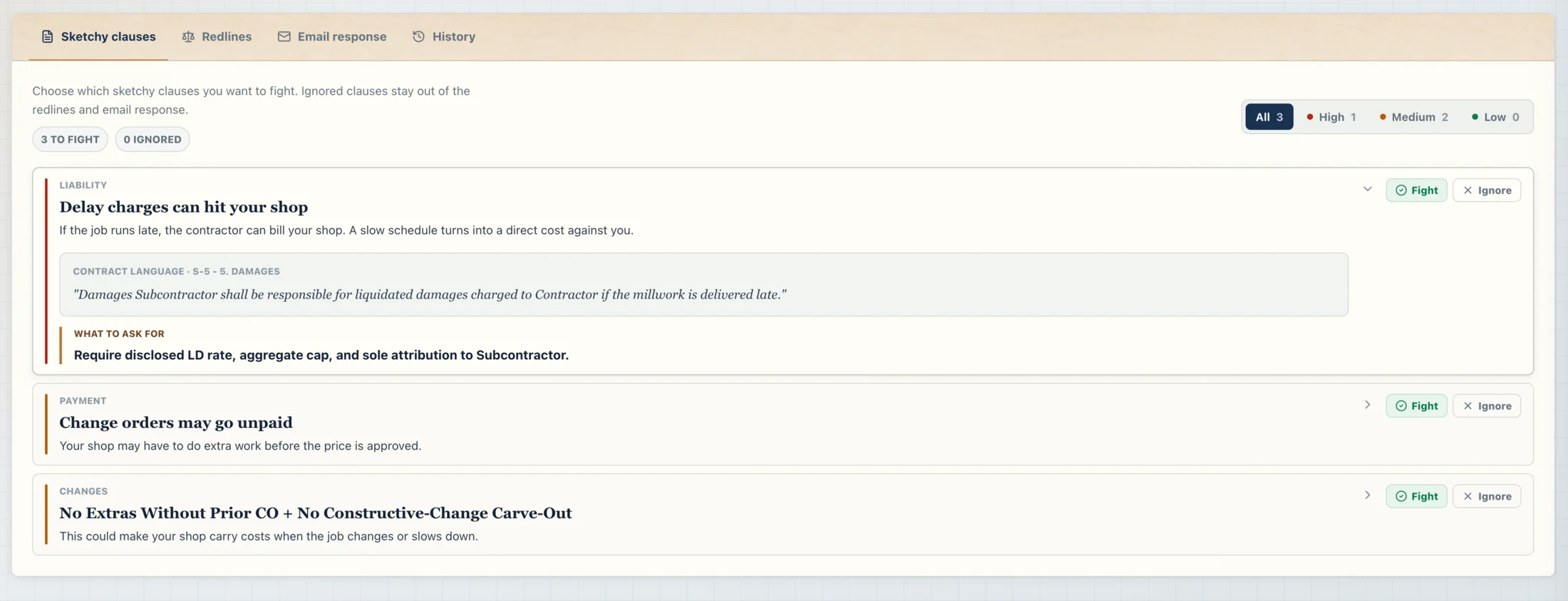
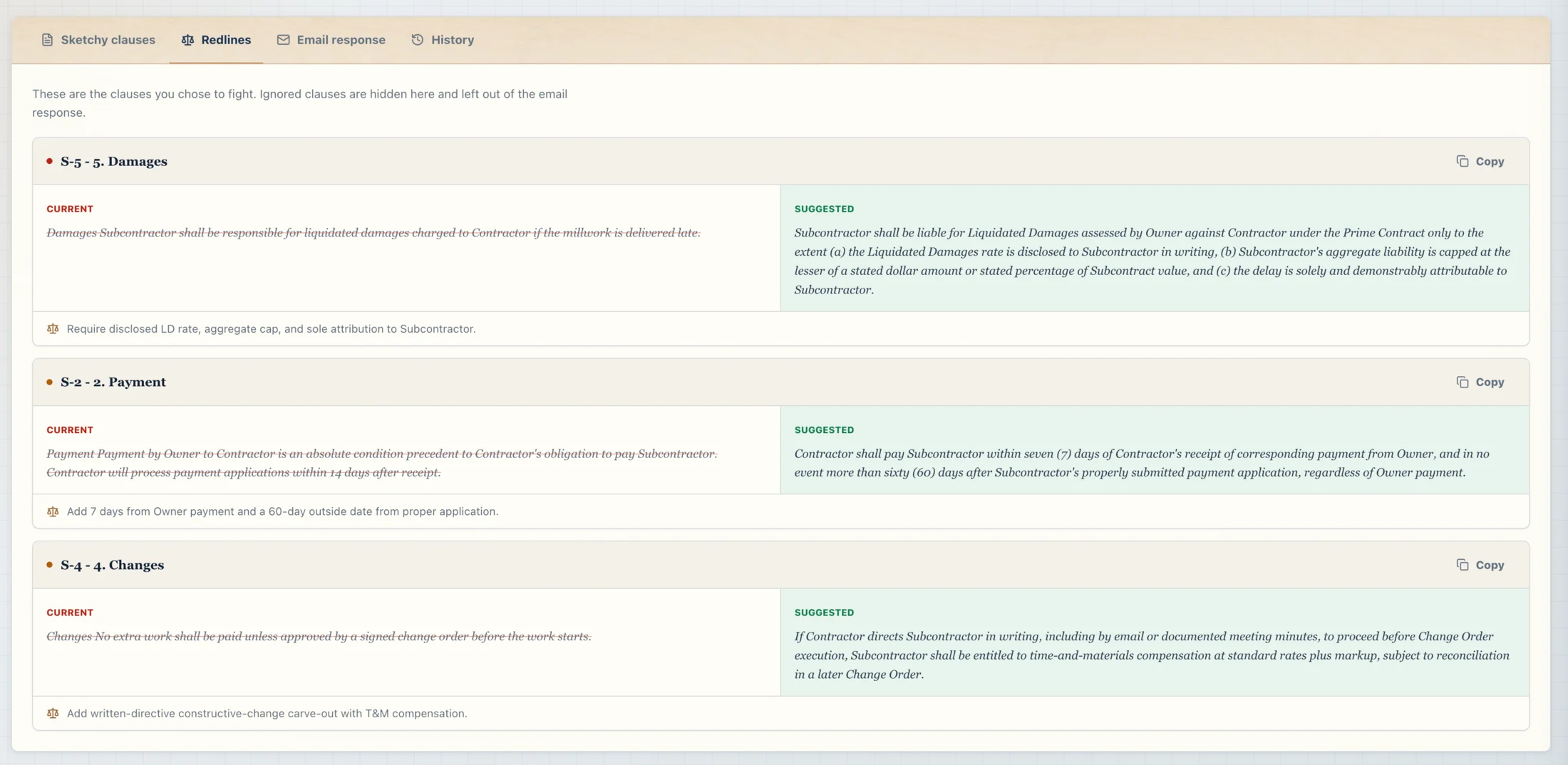
Redlines
For every clause you choose to fight, MillworkShield drafts cleaner replacement language so you are not starting from a blank page.
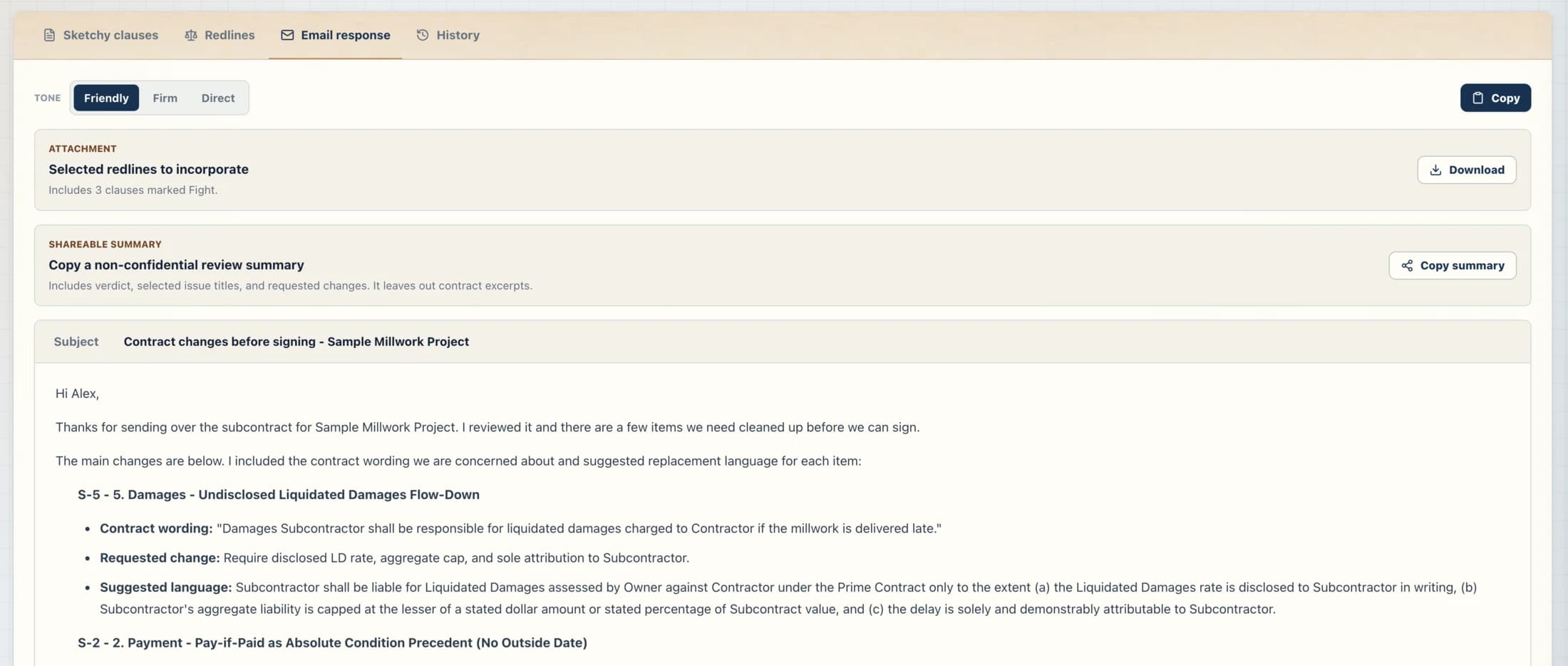
Email response
Pick the tone, attach the redlines, copy a non-confidential summary, and send a professional response while you still have leverage.
Practical tools
The order to check payment, scope, delay, liability, and closeout.
OpenThe phrases that create risk, and cleaner language to ask for.
OpenPractical wording to clean up payment, delay, change-order, and liability terms.
OpenEstimate retainage drag and delay exposure, and match clauses to known risks.
OpenChecklist, partner handouts, attorney packet, and a sample walkthrough.
OpenTry it on your next subcontract
Bring the contract your GC sent. MillworkShield shows the clauses worth pushing back on and drafts the reply language for you — while you still have leverage.
Review a contract